“`html
Driveway Cleaning Albany NY: Why Most Methods Fail Here
⏱️ 14 min read · Last updated: 2026
- Professional pressure washing costs $0.10–$0.25 per square foot in Albany, or $400–$1,000 for a typical 2,000–4,000 sq ft driveway.
- Concrete driveways in Albany suffer accelerated deterioration from road salt; sealing every 2–3 years extends life by 10–15 years.
- Pressure washing concrete at over 4,000 PSI causes permanent surface damage; the safe range is 3,000–3,500 PSI.
- Pavers and flagstone require 1,500–2,000 PSI maximum; above that, grout washes out and pavers shift within a season.
- Oil stains require degreasing pre-treatment; pressure alone removes only surface residue, not embedded oil.
The crack ran from the garage door to the mailbox—half an inch wide by spring. My neighbor blamed the installation crew until a mason explained: it wasn’t poor workmanship, it was road salt doing exactly what it does to Albany driveways every winter. By March, the damage was permanent.
Driveway cleaning in Albany, NY is not the same problem your cousin in Phoenix is solving. The freeze-thaw cycles, the road salt applications, the efflorescence (that white chalky residue)—these compound, and pressure washing alone leaves them unaddressed. Most guides assume a one-size-fits-all approach: blast it with a surface cleaner attachment, maybe seal if you’re feeling responsible. That works in a dry climate. It fails here.
I’ve spent the last few years watching what actually works for driveways that sit through 20+ winter salt cycles, and the answer is messier than the standard advice suggests. There’s a right sequence, wrong surfaces to pressure wash, and a kind of sealing that most people get wrong. Here’s what changes everything.
Why Standard Advice Fails for Albany Driveways
The standard advice—”pressure wash annually and seal every few years”—assumes your biggest problem is dirt and algae. In Albany, road salt is the actual problem, and it works differently than dirt.
Road salt doesn’t just sit on the surface. It penetrates concrete and pavers through micro-cracks, then expands when moisture freezes inside. This hydraulic pressure breaks the material from within. By the time you see a visible crack or chip, the damage is months old. Pressure washing that crack now won’t undo the internal deterioration—it just reveals it.
This is why you’ll see driveways in Albany that look perfect in July but are spalling (surface layer flaking off) by October. That’s salt damage in motion. The guide that told you to “just keep it clean” was incomplete.
The second reason standard advice fails: it treats concrete and asphalt the same as pavers. They’re not. An asphalt driveway in Albany needs preventive seal-coating every 2–3 years because salt degrades the binder. Concrete needs a different sealing product (usually an acrylic or polyurethane) and different timing. Pavers shouldn’t be sealed at all in many cases—sealing traps moisture and causes efflorescence to get worse.
Quick check: Do you know whether your driveway is concrete, asphalt, or pavers? That determines everything that comes next. If you’re unsure, step outside and look at the edge: asphalt is black and crumbly; concrete is gray and smooth; pavers are individual stones with grout lines.

Concrete vs. Pavers: Two Different Problems
Concrete and pavers are completely different to clean in an Albany climate. One needs aggressive pressure; the other gets ruined by it.
Concrete is a solid slab. Salt penetrates it, freeze-thaw cycles damage it internally, and the surface gets stained and discolored. The right move is aggressive: pressure wash at 3,000–3,500 PSI to remove salt residue and surface deterioration, then seal immediately (within 24 hours) to prevent new salt from re-entering. If you delay the sealing by a week, rain and road salt have already started penetrating again. This is not optional in Albany.
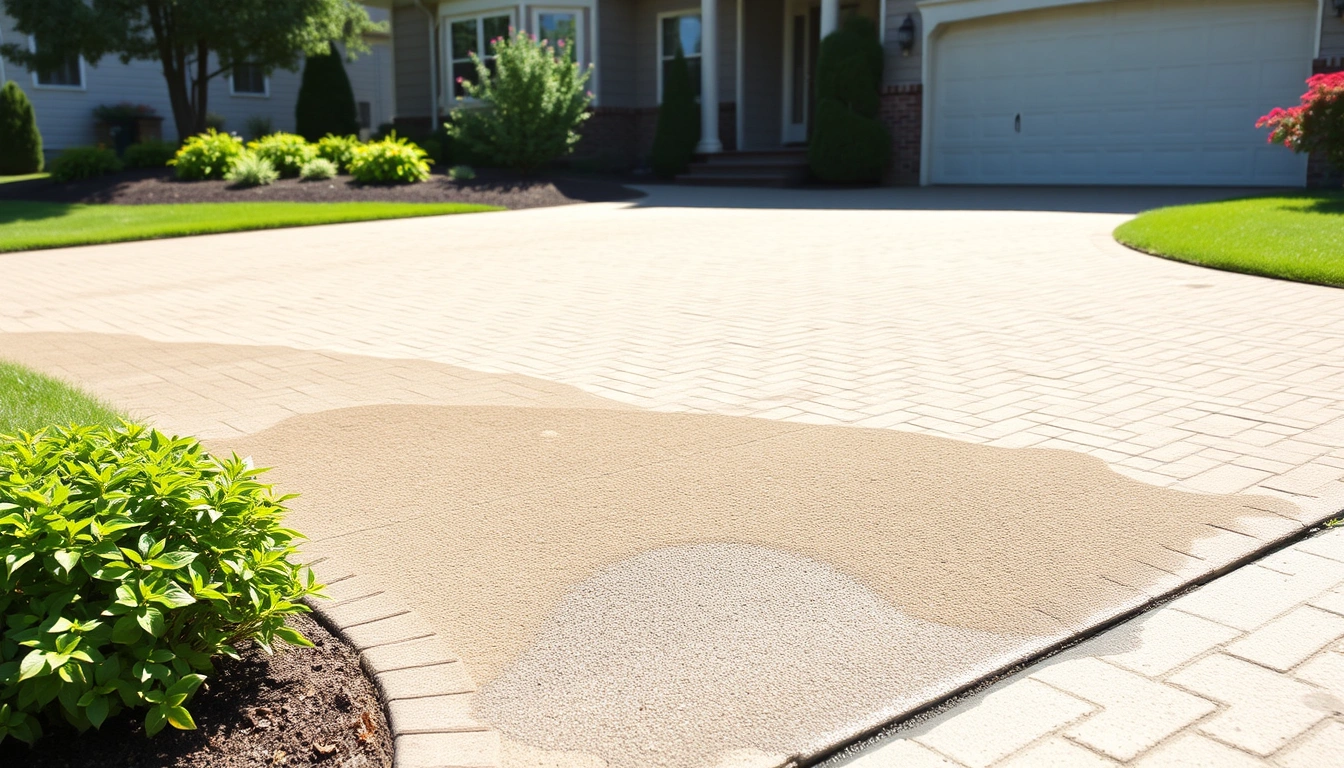
Pavers are individual stones set in sand or grout. Pressure washing them at anything above 2,000 PSI is asking for trouble. The water drives up into the joints, washes out the sand or grout, and within a season the pavers shift and settle unevenly. You’ll end up with a trip hazard and an expensive re-leveling job. If you have paver sealing, it also traps moisture, making efflorescence worse, not better. The honest move: if your pavers are dirty, use a lower-pressure wash (1,500–2,000 PSI max) or go lower and use a deck brush and degreaser.
| Surface | Recommended PSI | Best Method | Seal After? |
|---|---|---|---|
| Concrete (new, undamaged) | 3,000–3,500 PSI | Surface cleaner attachment, 15° nozzle | Yes, within 24 hours |
| Concrete (aging, salt damage) | 2,500–3,000 PSI | Wider fan spray to avoid damage | Yes, within 24 hours |
| Pavers (stone/brick) | 1,500–2,000 PSI | Low-pressure + brush or degreaser | No (traps moisture) |
| Asphalt | 2,000–2,500 PSI | Wider nozzle, never focused | Yes, seal-coat every 2–3 years |
Quick check: If you have pavers, stop here. Pressure washing above 2,000 PSI will cost you thousands in repairs down the line. A soft wash or scrub is your better bet.
Can Pressure Washing Remove Oil Stains and Road Salt From My Driveway?
Pressure washing alone will remove surface oil and salt residue, but not embedded stains or deep salt penetration. This is the gap that gets people.
Road salt sits mostly on the surface and between aggregate particles of the concrete—pressure washing at 3,000+ PSI blasts a lot of it away. You’ll see immediate results. But salt has migrated deeper, especially after 5+ years of winters. Sealing within 24 hours of washing prevents new salt from entering, which is why that step is so important in Albany. Without sealing, you’re reset to zero; salt re-enters during the next rain.
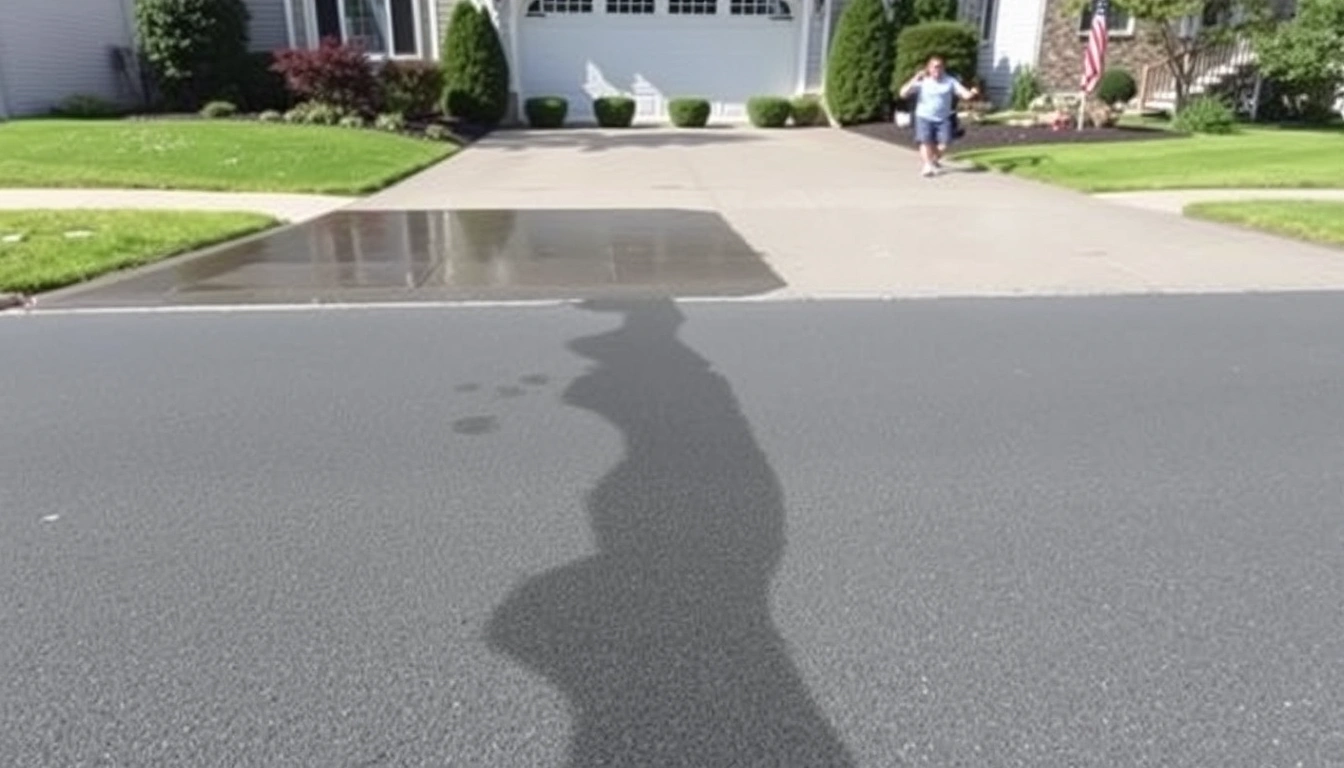
Oil stains are different. Fresh oil sits on top—pressure washing handles that. Old oil (years of dripping from a parked car) has soaked in. Pressure alone removes maybe 60–70% of the stain. To get better results, you need a degreaser pre-treatment: apply it 15–20 minutes before washing, let it break down the oil, then wash. Even then, ancient stains (5+ years) often don’t come completely clean. At that point you’re choosing between accepting a slight discoloration or getting a floor coating or resurfacer.
For surrounding towns where commercial properties deal with heavier salt application, oil stains compound. The salt itself can bind with oil residue, creating a stain that’s even harder to remove. Professional services often use enzyme-based degreasers specifically designed for salt-bound stains, which consumer products don’t handle as well.
Quick check: Is your oil stain from a recent spill or months old? Recent stains respond to degreaser + pressure wash. Old stains need lowered expectations or chemical strippers—professionals can help make that call.
The Right PSI for Your Surface
The single most expensive mistake I’ve seen is pressure washing concrete at 4,000+ PSI because someone read “pressure washers go up to 4,500 PSI, so why not crank it.” This causes permanent surface damage that no amount of sealing will undo.
PSI (pounds per square inch) is the force of the water jet. Higher PSI removes stubborn dirt and salt, but above a certain threshold, it doesn’t clean better—it just damages the surface. For concrete, that threshold is around 3,500 PSI. Go above that and you’re etching the surface, creating micro-pits where water and salt will now infiltrate faster. You’ve made the problem worse.
The magic is a surface cleaner attachment. This is a flat, spinning disk with two jets that apply pressure at a consistent angle and distance. It cleans at the same PSI but produces dramatically better, more even results because the nozzles are smaller and the pressure is distributed. Many professionals use 3,000–3,200 PSI with a surface cleaner and get superior results to 4,500 PSI with a handheld wand.
For concrete in Albany, 3,000–3,500 PSI with a surface cleaner attachment is the safest, most effective approach. Below 2,500 PSI and you’re leaving salt residue; above 3,500 PSI and you’re permanently damaging the surface.
Asphalt is softer and needs 2,000–2,500 PSI max—and you should never use a surface cleaner on asphalt because the spinning jets create dimpling patterns. Use a wider-fan handheld nozzle, keep distance, and go slow. Pavers are the most sensitive: 1,500–2,000 PSI, and honestly, a stiff brush and chemical cleaner often gets better results without the risk.
Quick check: If you’re renting a pressure washer, what PSI does it deliver? If it’s 3,500+ PSI, ask for a surface cleaner attachment and stay below 3,200 PSI. If it’s 4,000+, either rent a gentler machine or hire a professional—it’s that easy to cause lasting damage.
When to Seal and When It’s Wasted Money
Sealing is where most people spend money pointlessly because they don’t understand what sealing actually does—and doesn’t do—in an Albany climate.
Sealing does not make your concrete waterproof. It makes it water-resistant for a limited time. The goal in Albany is slowing salt ingestion during winter, buying you 2–3 years before the seal wears down and salt begins penetrating again. After that, you need to reapply.
Sealing right after pressure washing (within 24 hours, while the concrete is still slightly damp) works better than sealing a week later because the concrete’s pores are open and accepting. Delay a week, rain re-wets it, dust settles, and the seal adheres less effectively. This timing matters in Albany because you need maximum seal protection going into winter.
The wrong time to seal: if you have visible salt efflorescence (white chalky residue), or if the concrete is wet or humid. Sealing over efflorescence traps it beneath the surface, and it keeps migrating—paradoxically making the problem worse. You need to remove the efflorescence first. High humidity or wet concrete means the sealer won’t cure properly and you’ll get adhesion failure within months.
Best practice in Albany: pressure wash in late summer or early fall, dry the concrete fully (2–3 days of dry weather), confirm efflorescence is gone (rinse and let dry again if needed), then seal. This gets you through winter with full protection. Trying to seal in October before a storm front arrives is asking for failure.
In Albany, the best time to clean and seal is August–September. This gives maximum protection through winter salt application and prevents moisture from interfering with cure. Spring sealing is too late; winter damage is already happening.
For asphalt, sealing (or rather, seal-coating) is different. Asphalt degrades from UV and salt exposure—it cracks and becomes friable. Seal-coating every 2–3 years is genuinely necessary, not optional. Pavers: generally don’t seal them. If they’re already sealed and you’re getting efflorescence issues, stripping the old seal might actually help.
Quick check: When’s the last time your driveway was sealed? If it’s been 3+ years and you live in Albany, you’re vulnerable to salt damage. Plan a cleaning + seal-coat for August or September, not spring.
Edge Cases: When the Standard Approach Breaks Down
Not every driveway follows the script. Here are the scenarios where the standard advice backfires.
1. You Have Porous, Older Concrete That Crumbles When Pressure Washed
If concrete is over 20 years old and shows spalling (flaking surface), high-pressure washing can accelerate damage. The surface is already weak. Skip the pressure wash. Instead: use a low-pressure rinse (under 1,500 PSI) or a soft wash (chemical + brush, no pressure). Accept that the stains won’t fully disappear, but you won’t make the concrete worse. Then seal immediately with a penetrating sealer to protect what remains.
2. You Live in a Salt-Heavy Zone (Directly on a State Road)
If your driveway gets plowed salt or sits downwind of a salted road, the salt load is 3–5 times higher than normal. Standard sealing every 3 years won’t cut it; you need to reseal every 18–24 months. Also: pressure wash more aggressively (closer to 3,500 PSI) and more frequently (spring and fall, not just once a year). The salt is winning otherwise. This also applies to properties along major roadways where heavy commercial traffic runs.
3. Underneath Your Driveway Is a High Water Table
If your driveway is in a low spot that collects water or your area has a naturally high water table, sealing is less effective because water pressure from below can overcome the seal and force moisture up. Instead: focus on drainage. Grade the driveway slightly if you can, install French drains on the low side, or consider a permeable sealant that allows water to escape slowly rather than trapping it. Blocking moisture entirely isn’t the solution here—directing it is.
4. You Have an Asphalt Driveway That’s Already Cracking
If asphalt is severely cracked or has large potholes, seal-coating won’t save it. Seal-coat is preventive, not corrective. You need hot-patch repairs first (filling the cracks with asphalt emulsion) or even overlay or replacement. Pressure washing after patching is fine, but don’t assume sealing alone buys you time.
5. You Have a Composite or Recycled-Plastic Driveway
If your driveway is made of permeable pavers, recycled plastic, or a porous composite, standard pressure washing and sealing guidelines don’t apply. Most sealers are designed for natural concrete or stone. You need the manufacturer’s guidance. High-pressure washing can damage composites. Consult the product documentation before doing anything aggressive.
6. The Stain Isn’t Oil or Salt—It’s Rust, Mold, or Algae
Rust stains (from rebar or metal objects under the surface) respond poorly to pressure washing alone; they need a rust remover chemical first. Mold and algae need a mildewcide, not just pressure. Salt residue is easy; bio stains are not. Use the appropriate chemical pre-treatment, let it sit 15–20 minutes, then pressure wash at lower PSI (2,000–2,500 for concrete). This is one area where hiring a professional makes sense because they know which products work.
How Much Does Driveway Cleaning Cost in Albany?
The cost of professional pressure washing in Albany, NY runs $0.10–$0.25 per square foot, meaning a standard 2,000 sq ft driveway typically costs $200–$500, and a 4,000 sq ft driveway costs $400–$1,000. The range depends on your surface condition, whether oil stains require pre-treatment, and whether you’re sealing afterward.
Here’s what moves the price up: If your concrete has heavy efflorescence or salt residue buildup, some services charge extra for pre-treatment chemicals. If you’re doing a full clean-and-seal job, expect an additional $0.05–$0.15 per square foot for the sealer (so add $100–$600 total, depending on size and sealer quality). Pavers cost slightly more per square foot because they require lower PSI and careful technique—figure $0.15–$0.30 per sq ft.
The real decision isn’t the base cleaning cost. It’s whether the sealing cost makes sense as part of the same job. When you combine cleaning and sealing together, the pressure washing Albany NY service is vastly more effective than sealing months later because the seal adheres better and the timing protects you into winter. Bundling them often offers better value than booking them separately.
A 3,000 sq ft concrete driveway in Albany: pressure wash $300–$600, plus sealant $200–$300. Combined one-day job. Doing the wash now and sealing later (whenever you get around to it) means worse results and often higher total cost.
For DIY: A rented pressure washer costs $60–$100 per day (usually 3,000–4,000 PSI). A pressure washing before and after Albany transformation will take 4–6 hours of your time for a typical driveway. You’ll save money on labor but pay for equipment rental and chemicals (degreasers, sealers). If anything goes wrong—too much pressure, etching the concrete—you’ve lost time and money. For most people in 2026, hiring a pro for at least the sealing makes sense, even if you wash yourself.
Quick check: Is your driveway 2,000 sq ft or 4,000 sq ft? Are you cleaning alone or adding a seal? Use those variables to ballpark: small + no seal = $200–$400; medium + seal = $400–$800; large + seal = $600–$1,200. Real quotes will vary, but this gives you a baseline to evaluate.
- Road salt, not dirt, is the real problem for Albany driveways. Pressure washing helps, but sealing within 24 hours is what stops salt damage year-round.
- Concrete needs 3,000–3,500 PSI with a surface cleaner; pavers need max 2,000 PSI or they’ll fail within a season. These are not interchangeable.
- Sealing in August–September (before winter) is 10 times more effective than spring sealing. Plan accordingly.
- Professional pressure washing cost is $0.10–$0.25 per sq ft; sealing adds $0.05–$0.15 per sq ft. Bundle them for best results and value.
Common Questions About Driveway Cleaning Albany NY
What’s the best time to pressure wash my driveway in Albany?
Late August through September. This is before the first road salt applications and gives you full protection through winter. Spring pressure washing removes winter damage but leaves you vulnerable to new salt cycles. Avoid washing before rain—the seal won’t cure properly.
Can you pressure wash paver driveways in Albany?
Yes, but only at 1,500–2,000 PSI maximum. Higher pressure washes out the sand or grout between pavers, causing them to shift and settle unevenly—a costly repair. Low-pressure washing + brush or degreaser gives better results without risk. Never seal pavers; it traps moisture and makes efflorescence worse.
Is it worth hiring a professional for pressure washing vs. doing it yourself?
Professional services prove is pressure washing worth it Albany because they know the right PSI for your surface, have proper equipment and chemicals, and can coordinate sealing the same day. Rental equipment costs $60–$100 daily, you risk permanent damage if PSI is wrong, and sealing later is less effective. Budget $300–$700 for a full job including seal.
Will pressure washing remove all oil stains from my driveway?
Pressure washing removes surface oil but not deeply embedded stains. Fresh spills come clean; old stains (years of dripping) typically clean 60–70%. Use a degreaser pre-treatment 15–20 minutes before washing for better results. Ancient stains may require floor coating or chemical strippers. In Albany, salt can bind with oil, making it even harder to remove.
How often should I seal my concrete driveway in Albany?
Every 2–3 years is standard. If you live on a state road or salt-heavy zone, reseal every 18–24 months. Sealing doesn’t make concrete waterproof—it resists water and salt penetration for a limited time. Once the seal wears, salt re-enters. Resealing in late summer gives maximum protection through winter.
What’s white chalky residue on my driveway after winter?
That’s efflorescence—salt migration and mineral deposits triggered by freeze-thaw cycles. It’s not just cosmetic; it signals salt has penetrated the concrete. Rinse it away, let the driveway dry completely, then seal to prevent it from continuing. Sealing over efflorescence traps it and makes it worse. Address the efflorescence first.
The Bottom Line
Driveway cleaning in Albany, NY is not a commodity task. Road salt and freeze-thaw cycles create a problem that standard advice doesn’t address. The right approach is specific: know your surface (concrete vs. pavers), use the right PSI (3,000–3,500 for concrete, max 2,000 for pavers), and commit to sealing within 24 hours of cleaning in August or September—not when you feel like it.
If you’re currently dealing with efflorescence, cracks, or oil stains, one action step this week: schedule a consultation with a local pressure-washing service for late August. Get a quote that includes cleaning and sealing together. That bundled approach, done at the right time of year, is worth the cost because it actually solves the problem instead of temporarily masking it. In 2026, that’s what separates results that last from results that fade by spring.
“`
See also: pressure washing Albany NY
See also: pressure washing before and after Albany
See also: is pressure washing worth it Albany
Related: driveway cleaning cost Albany NY
Related: remove oil stains concrete driveway
Related: concrete vs paver cleaning method