“`html
Remove road salt stains from your driveway: what works after Albany winters
⏱️ 8 min read · Last updated: 2026
Albany winters leave behind stubborn road salt stains that ruin the look of your driveway and cause long-term damage. Simply rinsing with water won’t solve the problem because salt crystals remain embedded in the concrete pores, leading to recurring efflorescence and pitting. To remove road salt stains effectively, you need a concrete neutralizer, proper dwell time, and pressure washing—timed correctly before Albany’s spring freeze-thaw cycles cause further harm.
- Efflorescence can return within 2–3 weeks if you rinse only, but neutralizer can prevent recrystallization for 3–4 months.
- Freeze-thaw damage in the Albany capital region starts around March, and untreated salt damage accelerates past mid-April.
- Neutralizer dwell time is 15–30 minutes, and rushing the soak can reduce effectiveness by 40–60%.
- Professional neutralizer application costs $150–$350 for a standard two-car driveway in Albany as of 2026.
- DIY neutralizers cost $35–$80 per gallon and usually cover 400–600 sq ft, depending on concrete porosity.
Why rinsing alone does not fix road salt stains
Rinsing removes surface residue, but it does not remove the salt inside the concrete. Road salt dissolves into moisture in the slab, then rises back to the surface when the water evaporates. That is why the white haze returns so quickly after a hose or pressure washer pass.
Efflorescence is the white bloom you see on the surface. It is not just a cosmetic issue. When salt stays in concrete and temperatures drop below freezing, the crystals expand and create micro-fractures. In Albany, those fractures deepen through late March and can lead to visible pitting.
The correct fix has three parts. First, neutralize the salt so it stops recrystallizing. Second, flush it out. Third, seal or protect the concrete so it absorbs less moisture later. Skip the neutralizer, and the stains often return within three weeks.
How do you diagnose road salt damage before it becomes pitting?
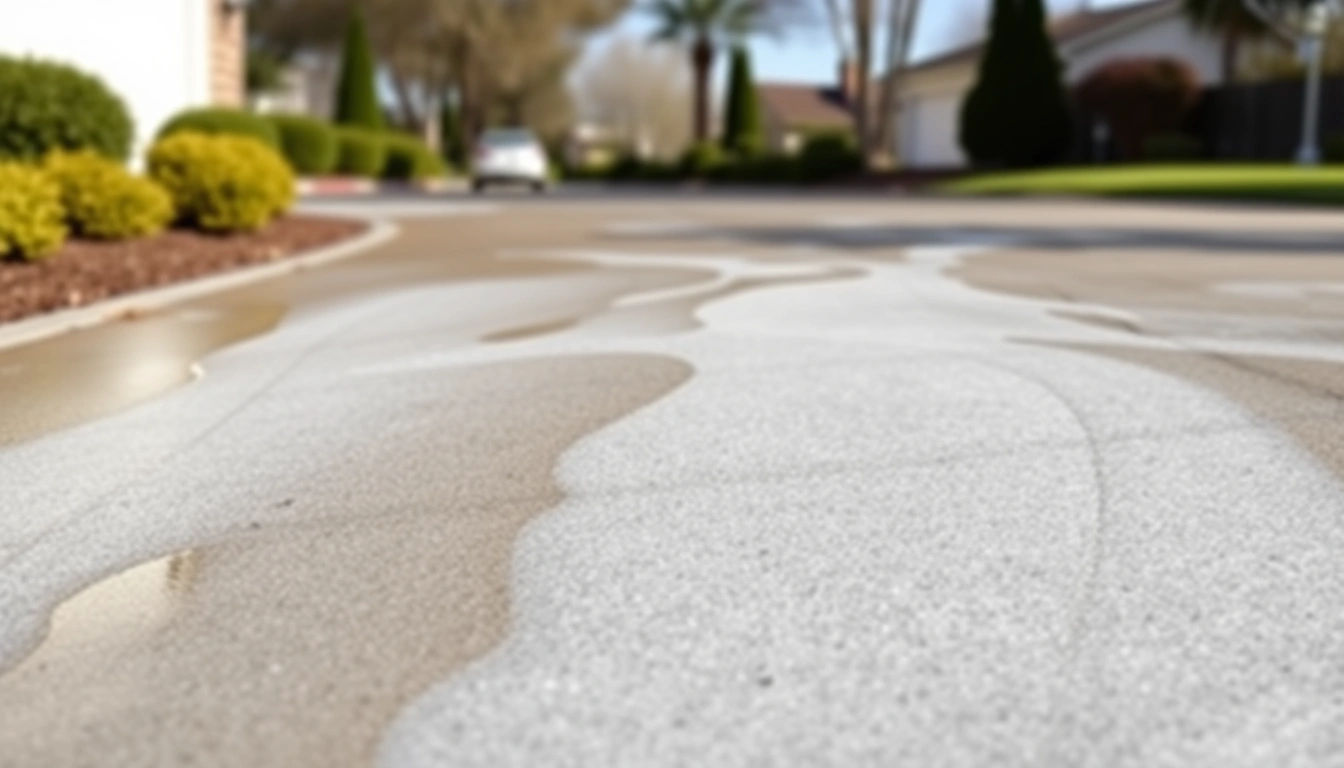
Road salt damage is easy to sort into two stages: surface staining and surface breakdown. Smooth concrete with a white or gray film usually means efflorescence. Rough texture, catch points under your fingers, or a scraped-up look usually means pitting.
Run your hand across the slab. If it feels smooth, a neutralizer can help. If your fingers catch, the freeze-thaw cycle has already damaged the top layer. At that point, neutralizer alone will not restore the surface.
Pitting usually means you need more than cleaning. Larger pits often need professional assessment, because they can signal deeper structural concerns. Check shaded areas, edges, and drain zones first, since those spots stay wetter and collect more salt.
Look for pitting in shaded areas first. They stay damp longer and usually show the earliest damage.
Use a quarter to estimate depth. If the concrete is still smooth but stained, you are likely still in the repairable stage.
Three removal paths based on what you are actually dealing with
Choose the treatment based on the concrete’s condition, not on the stain’s appearance alone. The goal is to match the method to the slab so you do not waste time on a fix that cannot survive another Albany winter.
| Your situation | Best path | Why other options fail |
|---|---|---|
| White or chalky stains, smooth concrete, first salt season seeing this | DIY neutralizer plus pressure wash | Rinsing alone lets salt reabsorb, and sealers are premature before neutralizing |
| Visible pitting, rough texture, stains returning faster each year | Professional neutralizer plus resurfacing compound plus sealer | DIY neutralizer stops new damage but cannot fix existing pits |
| Mild staining, concrete is 15+ years old, budget under $200 | Neutralizer plus pressure wash only | Resurfacing costs $100–$200 and still will not stop re-staining without sealer |
Path 1: DIY neutralizer for surface stains and smooth concrete
Use this path when the stains are visible but the slab still feels intact. It is the most common case in the first 3–5 years of Albany winter exposure.
A DIY neutralizer is enough when the concrete still feels smooth. It works best for efflorescence that has not yet turned into pitting.
- Apply a concrete neutralizer with a pH of 7–8. Brand examples include Terminator-HSD and ACT Concrete Cleaner. Most products mix at 1 part neutralizer to 3–5 parts water.
- Apply the solution evenly across the driveway so every stained area gets full coverage.
- Let it sit for 15–30 minutes. Do not let it dry during that time.
- Pressure wash at 2,500–3,000 PSI, keeping the nozzle 12–18 inches from the surface.
- Rinse with fresh water so no neutralizer remains behind to reactivate salt bloom.
- Let the concrete dry for 48 hours in dry conditions before judging the result.
Path 2: Professional neutralizer plus resurfacing for visible pitting
Once pitting appears, a professional crew often makes more sense. DIY resurfacing products rarely match the concrete color or texture well, and application quality matters.
In Albany, a typical two-car driveway costs $150–$350 for professional neutralizer application, with sealing often included. That price can be worth it when the damage is moving past the surface stage.
Professionals usually use a stronger commercial neutralizer, then pressure wash at 4,000+ PSI to remove stains and loose concrete. After that, they apply a polymer-modified resurfacer that bonds to the top layer and fills the pits. A sealer follows within 48 hours.
This process usually takes a full day. It can protect the driveway for 3–5 years, depending on salt exposure and freeze-thaw frequency.

Does road salt damage concrete in Albany, and how do you stop it?
Yes. Albany’s heavy road-salt use and repeated freeze-thaw cycles create ideal conditions for concrete damage. In March, temperatures can swing 20–30 degrees Fahrenheit in a day, and that stress weakens the slab when salt is present.
Road salt lowers the freezing point of water, which helps with traction but harms concrete. Salt-contaminated concrete keeps moisture in the slab, so water pockets expand and contract each time temperatures change. That weakens the surface layer bit by bit.
The damage speeds up over time. A driveway that only has surface stains in March may show pitting by June if the salt is left in place. Each freeze-thaw cycle pushes the damage deeper.
Concrete pitting damage in Albany can accelerate after 3 full freeze-thaw cycles with salt present.
To stop it, apply a neutralizer and sealer by mid-to-late April. Then limit salt reabsorption by sealing regularly and redirecting melt water away from the slab.
The spring timing that changes everything
Timing matters more than most people expect. In Albany, the best window for removal and prevention is late March through mid-April. That is when salt stains are easiest to see and before the worst spring damage is locked in.
Start checking in late March. The concrete is still damp from melting snow, so salt bloom shows clearly. Do not wait until May, when stains can seem lighter simply because the slab dried out. The salt is still there, and the freeze-thaw cycle has already caused microscopic cracking.
If you hire professional driveway cleaning in Albany NY, book it for early April. Crews are usually less booked then, and you can treat the driveway before late-April cycling compounds the problem.
For sealer application, late April through May is best. Temperatures are usually above 50 degrees Fahrenheit, concrete dries faster, and the sealer cures properly. Avoid rain forecasts and nights below 45 degrees.
Quick check: Before April 15 is ideal for removal. Between April 15 and May 1, proceed but focus on damaged areas first. After May 1, you are mostly managing existing pitting.
When the standard advice breaks down
The basic workflow assumes concrete is still in decent shape and the weather is typical for Albany. Some conditions need a different approach, especially when road salt stains are joined by deeper deterioration or year-round exposure.
Scenario 1: Concrete is actively spalling
Spalling means the concrete is flaking or peeling in chunks. That is structural failure, not a cleaning problem. Neutralizer will not help. A contractor may need to saw out and replace damaged concrete.
Scenario 2: Stains return within one week of pressure washing
If you did not use neutralizer, this usually means the salt concentration is very high or moisture is still trapped in the slab. Wait a full week after pressure washing before reassessing. If the stains still return fast, you likely need professional-grade neutralizer and sealing.
Scenario 3: You already sealed the driveway
If the stains still return after sealing, you sealed over salt. The sealer trapped moisture and salt inside the concrete. You will need to strip the sealer, neutralize the bare concrete, then reseal.
Scenario 4: The driveway sits next to a salt-storage pile or parking lot
Salt exposure is continuous in these cases, not seasonal. Neutralizer may last only 6–8 weeks before stains return. Your choices are quarterly sealing, a salt-resistant penetrating sealer, or accepting seasonal maintenance.
Scenario 5: You also need to remove oil stains concrete driveway
Oil and salt need different products. Oil stains require degreasers, while salt removal needs neutral pH products. Treat oil-only spots first, rinse thoroughly, then neutralize the driveway in a separate step. Do not mix the two approaches.
Scenario 6: It is October or November and stains just appeared
Fall stains are a warning sign. You still have 5–6 months of freeze-thaw cycling ahead, so treat and seal right away. Fall treatment gives the concrete more protection through winter and reduces spring damage.
Understanding salt damage before summer
Most people notice the problem in spring, but the timeline starts earlier. Staining often begins in January or February when salt use is highest. Snow hides it. By March, the salt has moved into the concrete. By April, freeze-thaw cycles are creating pitting. By June, the damage is usually more advanced.
This is why professionals push April treatment. Winter road salting usually ends by mid-April in Albany. After April 15, the damage you see is the damage you have to manage long term. Treating before then stops new damage. Treating after then mainly keeps the problem from worsening.
- Rinsing removes surface stains but leaves salt in the concrete; neutralizers stop recrystallization and are necessary for lasting results.
- Late March through mid-April is the critical Albany window for treatment before freeze-thaw cycles turn stains into pitting.
- Efflorescence needs 15–30 minutes of neutralizer dwell time; skipping that step wastes time and money.
- Visible pitting means professional-grade treatment, because DIY neutralizers cannot reverse structural damage.
Common questions about removing road salt stains from driveway
How do I remove white salt stains from my driveway after winter?
Apply a concrete neutralizer according to the label, let it sit for 15–30 minutes, then pressure wash at 2,500–3,000 PSI. Rinse with fresh water and allow 48 hours to dry. DIY neutralizers usually cost $35–$80 per gallon and cover 400–600 sq ft. This stops recrystallization better than rinsing alone.
Does road salt damage concrete in Albany?
Yes. Albany’s freeze-thaw cycles and heavy road-salt use create ideal conditions for concrete pitting. March temperature swings of 20–30 degrees Fahrenheit make the damage worse, and repeated exposure can shorten concrete life from 30–40 years to 15–20 years.
What is efflorescence and why does it come back after rinsing?
Efflorescence is white salt bloom on concrete. Rinsing removes the crystals on top, but salt stays in the pores. As the slab dries, the salt rises again. A neutralizer changes the chemical structure so it does not recrystallize for 3–4 months.
What is the difference between efflorescence removal and concrete pitting?
Efflorescence is a surface stain from salt bloom and can be treated with neutralizer. Pitting is structural erosion caused by freeze-thaw cycles. Pitting often needs sealing or resurfacing after neutralization, because neutralizer alone cannot rebuild the surface.
When should I treat salt-stained concrete in spring to prevent damage?
Late March through mid-April is the best window in Albany. Before April 15, you can still stop new damage. After that, you are mostly managing what already happened. Waiting until May or June means the preventive window is gone.
How much does professional driveway salt stain removal cost in Albany?
Professional driveway cleaning cost for neutralizer treatment usually ranges from $150–$350 for a two-car driveway as of 2026. The price depends on concrete condition, pitting severity, and whether resurfacing or sealing is included.
The bottom line
Road salt does more than stain concrete. It damages the slab through freeze-thaw cycling, and the damage gets worse every winter it is left alone. Rinsing may improve the look for a day, but it does not solve the problem.
Neutralizer is the step most people skip, even though it is the part that stops recrystallization. DIY treatment often costs less than $100, and the full process usually takes about four hours including drying time. For Albany, the best time to act is late March through mid-April.
If the concrete already has pitting, professional repair becomes the smarter choice. A typical job costs $150–$350 and can protect the driveway for 3–5 years. That is far less than the $3,000–$5,000 cost of full replacement.
This week: check your driveway with the hand test. If it feels smooth, plan a DIY neutralizer treatment for April. If it feels rough, get quotes from a contractor now. One clear decision this week can keep the damage from getting worse.
For more on driveway maintenance, explore driveway cleaning Albany NY methods and remove oil stains concrete driveway guides.
Related: Latham driveway cleaning · sidewalk cleaning cost Albany · pressure washing statistics driveway concrete
See also: driveway cleaning Albany NY
See also: remove oil stains concrete driveway
See also: pressure washing statistics driveway concrete
“`
See also: driveway cleaning Albany NY
See also: remove oil stains concrete driveway
See also: pressure washing statistics driveway concrete